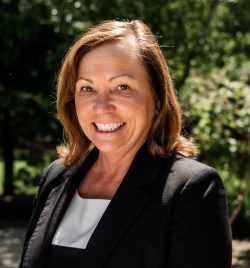
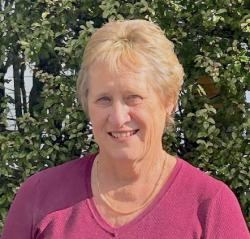
Dawn Koeltzow serves as Senior Director for Workforce Equity Management at Illinois Central College. She works closely with the Illinois Community College Board and the leadership at Illinois Central College to guide the success of the statewide Workforce Empowerment Initiative (WEI). The program serves historically underrepresented individuals and 20 colleges participate on the grant. To date, over 19,000 Illinoisans have received critical support services to complete high demand workforce training credentials. WEI focuses on removing barriers to student success, developing employer partners, providing career development, and offering work-based learning opportunities. Students have achieved an 89% outcomes rate for employment or transitioning to additional education. For this project, Dawn leads college consortium services, including: coaching, evaluation, advocacy, community of practice, webinars, equity trainings, consortium meetings/symposium, statewide marketing, outcomes reporting, and college site visits. To learn more about the WEI project, please visit illinoiswei.org.
Prior to her role in workforce equity, Dawn was a passionate leader for cooperative education. She served as the Director of the Springer Center for Internships at Bradley University and championed required experiential learning for students. Dawn was an active member and servant leader for associations in the field of cooperative education and internships. She served as President and Conference Chair for the national association (CEIA), regional association (MCEIA), and state association (ILCEIA) helping many colleagues to share their best practices in cooperative education. Dawn strongly believes in the power of colleagueship to improve educational institutions and to enhance personal and professional growth. She has a Master’s degree in Human Services Administration from Bradley University and a B.S. Finance from Arizona State University. She is honored to receive the CEIA’s Dean Herman Schneider Award in 2026.
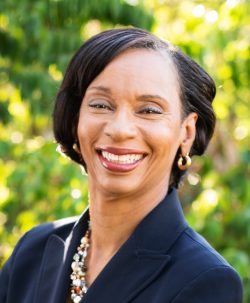 Dr. Posey has been President of Cincinnati State for 10 years, and employed for a total of 34 years. She is the first African-American woman to lead a major institution of higher education in Greater Cincinnati.
Under Dr. Posey’s leadership, Cincinnati State has reached its highest enrollment in more than a decade serving over 14,000 students, achieved its strongest financial position in 30 years, and is producing graduates with the highest average earnings among all 22 Ohio community colleges. During this same period, the College doubled its regional economic impact to $1.3 billion annually.
Dr. Posey holds a Doctor of Education from the University of Cincinnati, a Master of Business Administration from The Wharton School, University of Pennsylvania, and a Bachelor of Science from Cornell University.
She joined Cincinnati State after a business career with AT&T Company, starting as Assistant Dean of Cooperative Education & Graduate Placement in the Engineering Technologies Division. Over time, she successfully took on several other administrative roles including Provost.
At Cincinnati State, with faculty and the Deans, a visionary plan was developed to advance the cooperative education program and expand the efforts to include internships and service-learning. Now serving as President, Dr. Posey continues to advance work-Integrated programs as a core element of the College mission.
She serves on the boards of GRAD Cincinnati, Cincinnati Works, and the United Way of Greater Cincinnati. Community recognition includes the Business Courier Women Who Mean Business, the Greater Cincinnati YWCA Career Women of Achievement, and Cincy Magazine 100 Most Influential. Dr. Posey and her husband, Rev. Dr. Michael J. Posey, have also engaged in extensive community work that encompasses tutoring, mentoring, and endowed scholarships at Cincinnati State and Mount St. Joseph University.
For more than five decades, USAA’s Internship Program has reflected the organization’s culture of trust, service, and long-term investment in future talent. What began in 1971 as one of the earliest IT internship programs in financial services—with just 10–15 interns in San Antonio—has grown into a nationally recognized development program supporting approximately 300 interns annually across San Antonio, Plano, Phoenix, and Charlotte. This evolution demonstrates USAA’s enduring commitment to meaningful work, clear expectations, and intentional growth for early career professionals.
The program’s impact is rooted in the culture that surrounds it. Interns are welcomed into a learning-centered environment where they contribute to real, mission-aligned work supported by engaged mentors, career coaches, and project sponsors. This approach builds confidence, fosters trust, and helps students understand the purpose and value of their contributions. Through outreach, university partnerships, and programs that broaden access for veterans and students from diverse backgrounds, USAA continues to strengthen pathways into meaningful careers.
Leaders and teammates across the organization play a vital role in shaping this experience. By modeling leadership behaviors, sharing expertise, and creating an environment where interns feel supported and included, they help cultivate a strong talent pipeline and reinforce the culture that defines USAA.
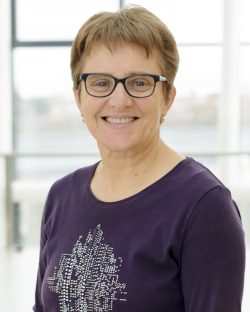
 Associate Professor Jenny Fleming (PhD, MSc, Grad. Dip T.Ed) has been employed at Auckland University of Technology for over 30 years in a variety of teaching and leadership roles. Her current role is Head of Academic Partnerships for the School of Sport, Exercise and Health. Previously, she led the Co‑operative Education and Work‑Integrated Learning (WIL) programs within the School and the University.
She has held significant leadership roles nationally and internationally related to Cooperative Education and WIL, including serving as a current Executive Board member of the World Association for Cooperative and Work‑Integrated Education (WACE), an Executive Member of the WACE International Research Committee, and Past President of Work‑Integrated Learning New Zealand (WILNZ). In 2024, she was recognized for her sustained, outstanding, and significant scholarly contributions to WIL nationally and internationally through being awarded Fellow of WILNZ. She also received the Ralph Tyler Award from CEIA in 2020.
Jenny has an extensive record of academic contributions and research, with more than 40 peer‑reviewed outputs and an extensive list of presentations. She is currently an Associate Editor for the International Journal of Work‑Integrated Learning (IJWIL), a reviewer for a wide range of journals, and an examiner for doctoral theses.
Over the past twenty years, her research has examined and challenged current practices in Cooperative Education and WIL, proposed new theoretical frameworks, and applied existing theory to better understand and improve practice. Her more recent research has focused on wellbeing in WIL, inclusive workplaces for WIL students, and managing risk in WIL. While some publications are situated within the context of sport, citations of her work demonstrate the transferability of her research findings to education researchers across a range of disciplines. Her international collaborations have enabled her to undertake cross‑disciplinary research projects that hold relevance for Cooperative Education and WIL stakeholders globally.
 Geraldine O’Neill is a Professor and educational developer in the UCD Teaching & Learning unit at University College Dublin, Ireland. Over the last 35 years working in the higher education sector, she has supported the enhancement of innovative changes to international, national, and institutional curriculum practices and policies. She has published extensively in areas such as curriculum design, authentic assessment, assessment of work-integrated learning (WIL), and assessment for inclusion. From 2015 to 2017, she worked at the national level in Ireland’s National Forum for the Enhancement of Teaching and Learning, focusing on developing a national understanding of assessment with particular emphasis on empowering students in the assessment process. In 2020, she received one of Ireland’s inaugural National Forum Teaching and Learning Research Fellowships to continue her research into the assessment of work-integrated learning. This national-level study, with input from international experts, used a participatory research methodology that gave key stakeholders a voice in enacting disciplinary changes to balance the authenticity and consistency of WIL assessment. This research built on her strong emphasis on student empowerment in assessment. She was awarded Article of the Year in the International Journal for Academic Development, is a Principal Fellow of the UK’s Higher Education Academy (PFHEA), and is currently the academic lead in the curriculum integration strand of University College Dublin’s work-integrated learning strategic initiative.

Michelle Kao is an April 2026 graduate in Physics and Astronomy at the University of Waterloo, exploring the intersection of science and engineering. Her most impactful Co-op experience was an eight-month term at the National Research Council Canada, Herzberg Astronomy and Astrophysics Research Centre (NRC-HAA), where she contributed directly to the development of CASTOR, a proposed Canadian-led space telescope mission.
Michelle independently developed a mission planning and scheduling software tool to optimize CASTOR’s observing programs. By combining mission-level specifications from industry (e.g., mechanical design, orbital parameters, solar panel layout, downlink requirements, and pointing
constraints) and survey-level requirements from the science team (e.g., areal coverage, photometric depth, and temporal coverage), Michelle created a suite of Python tools to optimally schedule observing programs and calculate CASTOR’s “observing efficiency” on a program-by-program basis. She showed how one survey could be re-optimized to nearly double its observing efficiency. Additionally, her technical contributions influenced key mission design decisions, including spacecraft solar array power feasibility and downlink strategy. Her trade analysis and optimization work translated into six million dollars in mission cost savings.
Beyond her technical achievements, Michelle is committed to leadership and community engagement. She has been a core member of FemPhys throughout her undergraduate degree, a student club supporting underrepresented groups in physics through career development and advocacy programs. She also served as the 2025 Waterloo Local Lead for the NASA International Space Apps Challenge, bringing the world’s largest annual global hackathon to the Waterloo community to foster interdisciplinary collaboration and strengthen ties between academia and industry in the Waterloo region.
Michelle’s passion for space missions and dedication to inclusivity continue to shape her academic and professional journey. Inspired by her work on CASTOR, she now plans to pursue graduate studies in aerospace engineering with a focus on spacecraft guidance, navigation, and control.
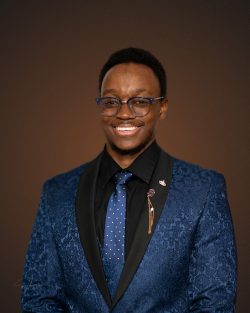
Asher Chiwawa is a Mechanical Engineering student at Youngstown State University with a strong interest in community-centered engineering and service. As an international student, he actively seeks opportunities to apply technical skills in ways that create meaningful, real-world impact.
Asher served as a Program Intern with the Economic Action Group through the Civic Innovation Transforming Youngstown (CITY) Internship Program. Working on a multidisciplinary team, he contributed to a community revitalization project focused on the Mahoning River, where he led 3D modeling and visualization efforts using SolidWorks to help communicate design concepts for long-term development planning. His work supported collaboration between students, community leaders, and local stakeholders.
In addition to his internship, Asher serves as a Resident Assistant and has held leadership roles in student organizations focused on engagement and service. He is honored to receive the CEIA 2026 Internship Student Achievement Award and remains committed to using engineering to positively impact communities.
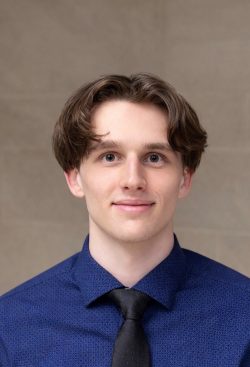
Thomas Reid is a fourth-year civil engineering undergraduate student at the University of Waterloo. During his time at EKFB, Thomas demonstrated confidence and a strong willingness to be part of the next generation of civil engineers. Working as a site engineer on a 3 km stretch of the United Kingdom’s revolutionary High Speed 2 (HS2) rail project, he was exposed to a complex and demanding work environment.
Thomas completed two four‑month placements with EKFB—one at age 18 and another at age 20—during which he managed a workload comparable to that of a graduate with two years of experience. Some of his major successes included overseeing several mini‑projects as the engineering lead, covering multiple engineers’ responsibilities while they were on leave, and clearly conveying progress reports to senior management during meetings. Additionally, he learned many industry‑leading practices thanks to HS2’s world‑class standards, gaining experience in detail-oriented quality assurance and data collection of key assets on his site. Throughout his time at EKFB, Thomas also formed many meaningful connections with colleagues in both the site office and the construction site.
Outside of work, Thomas enjoys staying active and spending time with friends and family. He is also an avid sports fan. While in the United Kingdom, he attended several Premier League and rugby union matches in London. In addition to participating in team sports, Thomas is currently training for his third Vancouver Marathon. Looking to the future, he is excited about the opportunities presented through co‑op and aspires to build a successful career as a civil engineer.
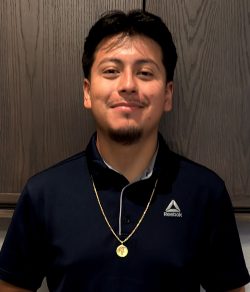
Elvi Basilio-Saucedo is a graduate of the Collision Repair and Refinishing program at Forsyth Technical Community College, where he developed a strong foundation in automotive body repair through hands-on training and real-world experience. His interest in the automotive industry began by watching his brother work on cars, which inspired him to pursue a career that allows him to work with his hands while solving technical challenges.
As a body technician, Elvi takes pride in the transformation process of each vehicle and finds the greatest satisfaction in seeing the before-and-after results of his work. He values a positive work environment, strong teamwork with coworkers, and the problem‑solving aspects of collision repair. These experiences have shaped his strong work ethic, attention to detail, and commitment to quality craftsmanship.
Elvi is especially proud of the certifications, awards, and professional recognition he has earned throughout his academic and career journey. These accomplishments reflect his dedication to continuous improvement and his determination to succeed in a demanding industry.
Looking ahead, Elvi’s goal is to build a successful and lasting career in the collision repair field. He credits much of his success to the support and encouragement of his instructors, employers, and especially his family, who have consistently pushed him to grow, improve, and reach his full potential.
The Smithsonian’s National Museum of African American History and Culture (NMAAHC) Internship Program is recognized with the 2026 CEIA Best Practices Award for its transformative approach to creating opportunities for the next generation of museum professionals.
At the heart of this best practice is the program’s centralized, equitable stipend model. Recognizing that unpaid or low-paid internships limit the talent pipeline to those with independent financial means, NMAAHC transitioned from disparate, department-funded models to a unified, museum-wide budget.
This initiative guarantees a consistent living‑wage stipend of $850 per week for full‑time interns and $425 per week for part‑time interns, regardless of their specific department or project. This shift ensures that all interns—whether in Curatorial, Conservation, Social Media, or Education—are valued equally for their contributions.
Beyond financial compensation, the program is distinguished by its holistic blueprint for professional development and enrichment. Interns engage in a structured 10‑ to 13‑week cohort experience that includes mentorship from world‑class scholars, technical skill‑building, and intern‑to‑intern peer learning sessions.
By combining measurable outcomes with a scalable funding model, the NMAAHC Internship Program demonstrates that meaningful, paid workplace‑based learning is not only essential for student success but also a sustainable institutional strategy. CEIA is proud to honor the Smithsonian’s NMAAHC Internship Program for its leadership in developing the next generation of museum professionals.
 Cherie Pierce Lynch is an educator focused on quality, pedagogy, and innovation in work-integrated learning. She serves as Vice President for Research & Surveys with the Cooperative Education and Internship Association (CEIA) and is an Assistant Professor of
Experiential Learning at Endicott College.
With more than fifteen years of experience in higher education and organizational development, Cherie leads CEIA initiatives connecting research and practice. She led toolkit development and leveled rubrics for Phase 2 of the Professional Competencies Project and facilitates the Research-to-Practice Webinar Series, engaging the US WIL community with international researchers and data-informed practice. Her work focuses on creating standards that support program quality across the field. Cherie has served as faculty for CEIA Academy in Vail and CEIA Academy on the Road at Endicott College.
At Endicott, she teaches within the School of Social Sciences, Communication, & Humanities’ Communication Division, leading a multi-year internship curriculum. Her work emphasizes equitable, evidence-based systems linking curriculum, assessment, and technology.
Cherie explores competency-based assessment, equity, and the role of emerging
technologies—including artificial intelligence—in enhancing quality and scalability in experiential learning. She is currently working with a team to analyze datasets exploring AI’s role in early professional jobs, internships, and the search process. She has presented nationally and internationally on curriculum design, assessment, and data-informed practice, including sessions at the WACE Research Symposium in Graz, the Society for Experiential Education National Conference in St. Petersburg, and CEIA National Conferences in Boston and Tampa.
She holds an Ed.M. in Higher Education Administration from Boston University and completed professional certification programs with Kay Peterson and David Kolb at the Institute for Experiential Learning as well as with the National Career Development Association (NCDA) and the Experiential Education Academy (SEE).
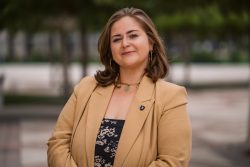
Samantha (Sam) Carmer, is the Assistant Director of Internship Programs and a Career Coach with the Center for Career Engagement & Opportunity at New College of Florida. She holds a B.A. in History from the University of Nevada, Las Vegas, and is currently pursuing a graduate degree in Curriculum and Instruction (Student Affairs) at the University of South Florida.
Sam leads high‑impact, equity‑centered experiential learning initiatives, including the award‑winning Community-Driven Internship Program (CDIP), which provides funded, academically rigorous internships with local nonprofit organizations. She also oversees the Pathways to Teaching program, a partnership with Sarasota County Schools and the School District of Manatee County, offering paid, semester‑long K–12 classroom internships and a direct pathway to alternative teacher certification.
As the dedicated career coach for international students, Sam supports CPT and OPT processes and works closely with International Student Services to assist international and queer students in their post‑graduation transitions. A nationally Certified Career Services Provider (CCSP), she co‑instructs Professional Experience by Design, an internship course that provides academic credit and prepares students for career‑ready success.
 Cheyenne Egstad is an assistant director on the Experiential Learning Team at the Florida State University Career Center, serving as the Career Liaison to the humanities majors within the College of Arts & Sciences. In this role, she guides students and coordinates programming to help them successfully find and secure experiential learning opportunities, explore career options, connect with potential employers, and translate their skills and experiences into real-world applications.
Before joining career services, Cheyenne taught in both K–12 and higher education environments, domestically and abroad, instructing students and creating culturally enriching engagement activities. She is passionate about increasing access to global experiences, integrating multicultural initiatives, and supporting diverse student populations.
Cheyenne has been a member of CEIA since 2024 and has served on the CEIA Conference Tech Committee, currently acting as the 2026 Conference Tech Chair. She holds a B.A. in Japanese Languages & Literatures from the University of Florida with a TEFL minor, and a master’s degree in Japanese Languages & Cultures from Florida State University. She is currently pursuing a certificate in project management from FSU.

October is national CEIA Month!

Join us at one of our great events to network and learn more about our great opportunities.

Our 1 Stop All things Experience Magazine...Click here to see our new issue!!

Stay in touch

Join our network

See what CEIA has to offer
 E-mail: info@ceiainc.org © 2026 Cooperative Education & Internship Association, Inc. | Contact Us | Privacy Policy | Login | Refund Policy


